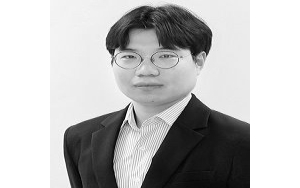
Jo Byung-su, General Director of '2023 Seoul Urban Architecture Biennale'
Seoul is the World's Most Blessed Natural Environment
Fragmented Green Spaces in Seoul Must Be Connected
Germany Plans Urban Development 100 Years Ahead
Set Major Directions and Adjust Details Gradually
The competitiveness of Seoul is directly linked to South Korea's international standing. It is also a benchmark city for gauging the happiness index of the Korean people. If Seoul rose to become a world-class city through the "Miracle on the Han River," it now faces the need for a second miracle. Seoul must transform into a city with the world's highest competitiveness, a city full of freedom and dignity, and a city where citizens are happy.
Seoul is a thousand-year-old capital. During the Goryeo period, Seoul served as the secondary capital called Namgyeong, and during the Joseon dynasty, it became the undisputed capital known as Hanyang. The royal city of Seoul, surrounded by fortress walls centered around Gwanghwamun, has undergone tremendous changes over the past century. Through the Japanese colonial period and the founding of the Republic of Korea, the city's boundaries greatly expanded, and its roles diversified. Today, it has the characteristics of an international city with a population of 10 million. Last year, the Japanese think tank Mori Memorial Foundation's Institute for Urban Strategies ranked Seoul 7th in the "Global Power City Index."
Notably, last year, with the relocation of the presidential office to Yongsan, the power axis of Seoul, which had continued for a thousand years, shifted to Yongsan. Despite numerous controversies, the transformation into a new Seoul has already begun. Voices calling for a redefinition of Seoul's future with a perspective looking at least 100 years ahead have grown louder. From near-term discussions on the redevelopment of Yongsan and the utilization of the Blue House to long-term visions on what kind of city Seoul should become, a broad outlook is necessary. To this end, Asia Economy collaborates with urban and humanities experts to envision Seoul's future. [Editor's Note]
![[Seoul's Future] Jo Byeongsu "100-Year Master Plan, We Must Start Drawing the Blueprint Now"](https://cphoto.asiae.co.kr/listimglink/1/2023010307410872028_1672699269.jpg)
![[Seoul's Future] Jo Byeongsu "100-Year Master Plan, We Must Start Drawing the Blueprint Now"](https://cphoto.asiae.co.kr/listimglink/1/2023010210100470850_1672621898.jpg)
[Asia Economy Reporter Seong Giho] There is a saying that "the landscape changes every ten years." However, the current Seoul is one of the most dynamic cities in the world, showing rapid changes not in ten years but even within one year or a month. Is it possible to make a 100-year plan for such a Seoul? Jo Byungsoo, the general director of the "2023 Seoul Urban Architecture Biennale," held in September and October this year, emphasized throughout the interview that "it is definitely possible."
He said, "Seoul is one of the most blessed cities in the world in terms of natural environment." He continued, "Drawing up and implementing a blueprint for a 'Green Seoul' that maximizes the city's strengths will make Seoul the most competitive city in the world." We met General Director Jo on December 27 last year at his studio located in Changseong-dong, Seoul.
- What do you aim to convey through the 2023 Seoul Urban Architecture Biennale?
▲ The theme of this biennale is "City of the Land, Architecture of the Land," with the subtitle "Drawing Seoul's 100 Years Later: The City of Mountain Paths, Waterways, and Wind Paths." Seoul is a city with excellent natural surroundings. It is hard to find a city anywhere in the world where nature blends so harmoniously, with various mountains like Bukaksan, Namsan, and Gwanaksan, and the beautiful Han River incomparable to other cities. The founders of Joseon, who established old Seoul (Hanyang), chose this place as the capital because of its natural beauty. Our ancestors designed old Seoul as an eco-friendly city that maximized hills and waterways. However, over the past 100 years of development, traditional urban structures and modern urban structures have clashed, and nature and the city have become fragmented, causing the image of a "city of the land" to be forgotten. Considering this, the goal of this biennale is to explore how to prepare for the next 100 years and determine the direction Seoul should take.
![[Seoul's Future] Jo Byeongsu "100-Year Master Plan, We Must Start Drawing the Blueprint Now"](https://cphoto.asiae.co.kr/listimglink/1/2022122809053266180_1672185932.jpg)
- What does "city of the land" mean?
▲ It refers to an eco-friendly city. It means making Seoul a nature-friendly and rural-like city again. Simply put, it is a proposal to connect the fragmented green spaces in Seoul. For example, the idea is to connect green belts from Bukhansan through the Blue House and Yongsan, passing by the National Cemetery to Gwanaksan. Of course, it must also be functionally feasible. Looking at European cities like Paris or London, old buildings harmonize well with their surroundings. Instead of just envying this, we want to create a rural city within nature for our descendants to live in decades or 100 years from now. As mentioned earlier, Seoul has a very blessed natural environment. We want to pass on Seoul's inherently nature-friendly urban environment to future generations.
- Considering the transportation environment, is it possible to create a "green axis" in Seoul?
▲ Looking 100 years ahead, transportation systems will likely be very different from what we imagine now. For example, if urban air mobility (UAM) becomes active, Seoul's appearance will change significantly. The city's transportation routes could fundamentally change. Also, creating a green axis does not mean removing roads entirely. For instance, possibilities like undergrounding the Gangbyeonbuk-ro and Olympic-daero along the Han River are open, and various green axes can be considered. Considering the climate crisis, Seoul will naturally become a pedestrian- and bicycle-friendly city. The future city should preserve the mountain greenery, valley streams, rivers and tributaries, wetlands and waterfront spaces in between, and the scattered hills within Seoul, while appropriately utilizing seasonal wind paths. In this process, new advanced technologies and data should be systematically used to be efficient in terms of mobility, energy, and time. It should not be just a "green city" that is merely lush but a convenient, eco-friendly, high-density city that provides a healthy environment.
![[Seoul's Future] Jo Byeongsu "100-Year Master Plan, We Must Start Drawing the Blueprint Now"](https://cphoto.asiae.co.kr/listimglink/1/2022122809051966178_1672185919.jpg)
- The Han River is relatively wide compared to other cities' rivers. Will the Han River also be connected as part of the green axis?
▲ That is definitely a consideration. For example, when building bridges over the Han River, we could build sufficiently wide bridges ranging from 200 meters to 2 kilometers. The upper part would be fully greened, and the lower part would handle traffic demand. It is also possible to build wide bridges with shops and convenience facilities on both sides. Various methods are being considered. Many ideas related to Han River bridges are pouring in for this biennale. Seoul's Han River has an environment so beautiful that it is hard to find in any other world city. The idea is to allow people to fully experience the Han River while connecting it to the green axis. This could significantly alleviate the chronic regional imbalance between Gangbuk and Gangnam in Seoul.
- So, is the biennale's theme about placing a straight green axis across Seoul?
▲ We are not insisting on a straight line only. We are receiving various ideas now. For example, there is an idea to create various green areas in a ring shape in Seoul and connect these green rings. We have invited 40 universities worldwide, and more than 100 different proposals will emerge. We will use these diverse proposals to create a 100-year master plan for a nature-friendly Seoul.
- Is a 100-year plan possible in Seoul, where changes happen so rapidly?
▲ In 1995, I lectured at the University of Kaiserslautern in Germany. As part of the class, I visited the Kaiserslautern City Hall with students and was greatly shocked there. A city official showed us a blueprint, saying, "This is what Kaiserslautern will look like 100 years from now."
![[Seoul's Future] Jo Byeongsu "100-Year Master Plan, We Must Start Drawing the Blueprint Now"](https://cphoto.asiae.co.kr/listimglink/1/2022122809041766166_1672185858.jpg)
- So Germany already had a 100-year urban plan at that time?
▲ Yes. While I was surprised, the official brought many other maps and documents. Looking closely, it showed how Kaiserslautern had changed over the past 100 years, marked every 2-3 years. For example, it explained why a certain street corner was shaped that way, what the city hall proposed at the time considering the 100-year urban plan blueprint, and how it was accepted. Designing 100 years based on such past changes inevitably improves the city. It does not mean deciding Seoul's 100 years immediately. We decide a big direction and proceed, allowing some changes along the way. It is also important to record why changes occurred for future generations.
- What do you think is the biggest obstacle to Seoul having a unique character compared to other cities?
▲ Floor area ratio, building coverage ratio, and district unit plans. This system is not necessarily bad, but it causes Seoul's uniqueness and harmony to disappear. For commercial areas, the building coverage ratio is set at 90%, and for residential areas, 60%. Since only these regulations must be followed, buildings that disrupt harmony are constructed within these limits. European cities have a big picture of the entire city before district unit plans or regulations, and architecture follows that. But we follow the American system, which adheres strictly to district unit plans and regulations. For example, under current law, new buildings must have parking lots. As a result, in old residential areas, buildings that are inconsistent and irregular compared to surroundings are built. The skyline, surrounding environment, and shapes of nearby buildings differ, but as long as uniform regulations are met, harmony is disrupted. Regulations need to be somewhat flexible according to the situation and environment where buildings are constructed. However, this could cause controversy over special privileges, so social consensus must come first.
© The Asia Business Daily(www.asiae.co.kr). All rights reserved.