Poor People Who Died in Semi-Basements Due to Heavy Rain
The Semi-Basement: Where Poor People Excluded from Society Go
Solutions for Semi-Basements Must Include Ways to Live Together with the Poor
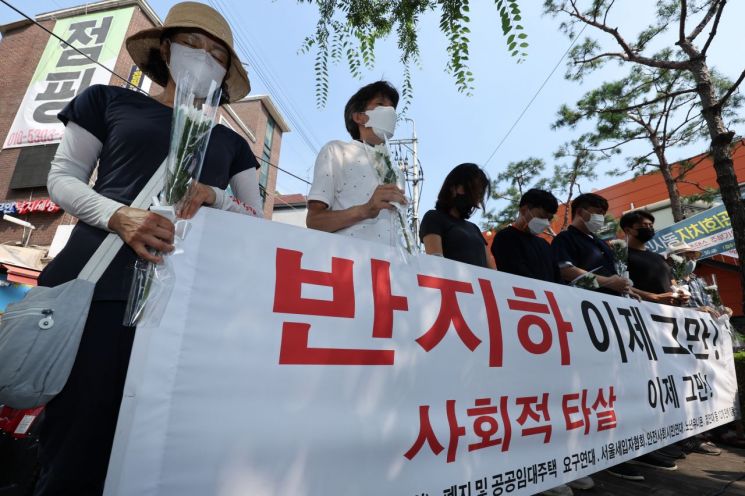
[Asia Economy Reporter Gong Byung-sun] On the 8th and 9th of last month, record-breaking heavy rain hit Seoul and the central region. The downpour claimed several lives. On the 8th, a family of three living in a semi-basement in Sillim-dong, Gwanak-gu, Seoul, tragically drowned as they could not escape the rising water. On the 10th, a woman in her 50s, Ms. A, who lived in a semi-basement in Sangdo-dong, Dongjak-gu, Seoul, also drowned. A common factor among this family and Ms. A is that they were basic livelihood security recipients living in semi-basements.
Semi-basements are a product of the Cold War. In 1970, following North Korea's Blue House raid, the government enacted a law requiring new houses to have basements. This was intended so that in the event of war with North Korea, these spaces could be used as bunkers without additional construction. In other words, these spaces were not originally designed for residential purposes. However, as industrialization progressed in the 1970s and people flocked to Seoul, semi-basement buildings began to be converted for residential use. To make them look more like homes, small windows were installed above ground level to allow light and ventilation, and these spaces came to be called banjiha (semi-basements).
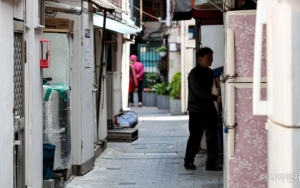
However, compared to above-ground spaces, semi-basements have significantly poorer sunlight exposure, humidity, and air quality. Mold and cockroaches are common, and with cars and people passing by right next to the windows, it is difficult to keep them open. Professor Kim Kwang-hyun of Seoul National University’s Department of Architecture said, "Though they are called semi-basements, they should be seen as underground spaces that are barely visible," adding, "Calling a space with just one window a 'house' is deceptive."
Semi-basements, hard to call homes... A place where society’s poor are pushed out
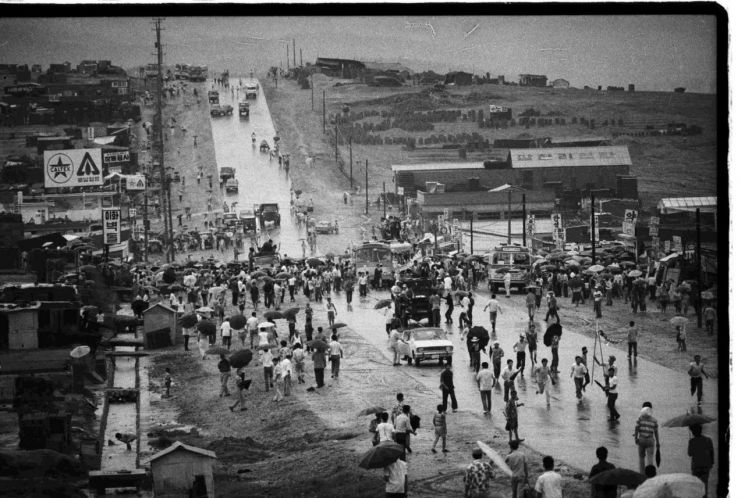
The history of semi-basements is intertwined with humanity’s history of expelling the poor. Across East and West, the poor have been associated with the sick, criminals, and others deemed undesirable, and thus excluded from society. People wanted to remove the poor from sight. Unfortunately, South Korea was no exception to this history. In the past, the Park Chung-hee government displaced slum dwellers to address the growing population in Seoul. A representative example is the Gwangju Mass Housing Project. The Park administration relocated slum dwellers evicted from Seoul’s slums to Gwangju County in Gyeonggi Province (now Seongnam City). However, due to rushed projects and corrupt administration, the poor did not receive proper housing in Gwangju County. This eventually led to the '8.10 Gwangju Mass Housing Incident' in 1971, where about 50,000 poor people clashed with police.
Foreign media comparing the recent semi-basement tragedy to the film "Parasite" is in the same context. The poor are pushed to the lowest of the low. After the release of "Parasite" in May 2019, the British public broadcaster BBC referred to semi-basements as 'banjiha,' describing them as "spaces that basically lack sunlight and are visible inside when people look down." A major foreign news outlet reported on the flooding incident in Sillim-dong, Gwanak-gu, stating, "In South Korea, where housing prices are one of the biggest political issues, living in a high-rise building constructed by a large corporation signifies social status," and "the poor live in cheap, damp, moldy semi-basements."
If the semi-basement issue is handled simplistically, backlash may arise... "A long-term approach is needed"
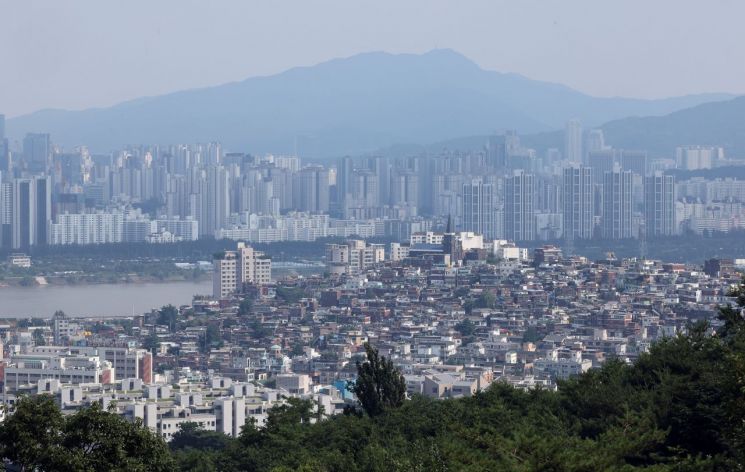
To prevent such problems from recurring, solutions to the semi-basement issue must focus on "how to integrate the poor into society." It is questionable whether Seoul’s measures consider this focus. Seoul City announced plans to prohibit the use of basements and semi-basements for residential purposes. Specifically, they plan to phase out residential semi-basements through a sunset policy and convert semi-basements to non-residential uses. However, there is no plan addressing where the poor who originally lived in semi-basements should go. Currently, about 200,000 people live in semi-basements in Seoul, so the sunset policy could lead to housing chaos.
There are also criticisms that Seoul City faces a difficult environment to implement groundbreaking measures. If policies are introduced to integrate the poor who have been hidden in semi-basements into society, the city may face backlash from other social members. It is common to see rental buildings in apartment complexes painted in different colors or separated by partitions. Even young children use derogatory terms like 'Hugyeoji' or 'Elsa' to refer to children living in public rental apartments. Moreover, if rental apartments are relatively easily allocated to those living in semi-basements, fairness controversies may arise. The poor may face not only a lack of housing but also social stigma.
Experts agree that for the poor to escape semi-basements and live harmoniously in society, the issue must be addressed with a long-term perspective. Professor Kim said, "If we want the poor not to live in semi-basements, simple policies won’t suffice; the public sector must secure a large number of quality housing units and establish long-term measures," adding, "Policies change every time the government changes, so how can the semi-basement problem be solved under such circumstances?"
© The Asia Business Daily(www.asiae.co.kr). All rights reserved.






![$29 Monthly Subscription AI Plant Appliance... US Startup Challenges LG [CES 2026]](https://cwcontent.asiae.co.kr/asiaresize/319/2026010819285284553_1767868133.png)