![[Opinion] Disaster Prevention Begins with Forecast Reliability](https://cphoto.asiae.co.kr/listimglink/1/2022081209012384859_1660262484.png)
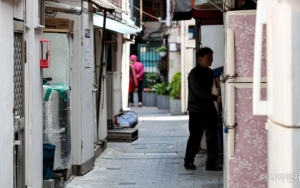
A record-breaking deluge hit Seoul and the metropolitan area. It was the worst heavy rain experienced in 115 years since weather observations began in 1907. By the 10th, 18 innocent citizens had lost their lives or gone missing, and 723 people in 570 households lost their homes. Thousands of vehicles were also submerged in the city. We must consider ourselves fortunate that there was no horrific damage like the Umyeonsan landslide.
The Korea Meteorological Administration's (KMA) advisory for the record-breaking heavy rain started at 2 a.m. on the 8th. It warned that up to 100 mm of heavy rain would fall on the West Sea Five Islands by 6 p.m. At 9:30 p.m., a warning was issued that the heavy rain falling until the 9th in northern Gyeonggi, including Yeoncheon, could exceed 300 mm. From 10:30 p.m., advisories and warnings were continuously issued for the Seoul area. There remains regret that the government and local authorities did not pay more attention to the rapidly issued forecasts from the KMA.
The movement of the rain cloud band that covered Seoul and Gyeonggi was dazzling. A long rain cloud band about 10 km wide moved up and down vividly. There are reports that while torrential rain exceeding 100 mm per hour fell in Dongjak-gu, the sky was clear in Dobong-gu. The radar images of the rain clouds repeatedly gathering and dispersing over Seoul were dizzying just to watch.
It is understandable that the public always expects accurate weather forecasts. The KMA should strive to improve the accuracy of its forecasts. However, forecasts cannot always be perfect. It is not always possible to precisely predict whether rain clouds will develop into a devastating deluge. Even with continuous investment and effort in meteorological observation technology, there will always be limitations to forecasting.
The situation is not much different in advanced meteorological countries. The United States, which could never forget Hurricane Katrina that devastated New Orleans in 2005, was on high alert for Hurricanes Gustav (August) and Ike (September) in 2008. Mayors, governors, and the president all took active measures, but the U.S. National Weather Service’s forecasts were considered overcautious. Yet, there were no complaints anywhere. Japan, which trusts its meteorological agency as much as family, also does not blame over-forecasting.
The KMA should not be turned into a boy who cried wolf. The damage from that would fall directly on the public. Irresponsible media that take pleasure in analyzing forecast errors need to come to their senses. There is no reason to force our KMA into a ranking competition with the meteorological agencies of Japan, the U.S., or Europe.
Rather, more attention should be paid to a sharp warning to the political circles that shamelessly ignore the harsh reality faced by the public and cling only to embarrassing and shameful political strife. The outdated feudalistic notion that the president must stay in the office and visit the site when it rains is hopeless. The clumsy excuses from the presidential office are also shameful. We must not mistake the absurd sophistry of a former government secretary, who claimed that deceiving the public with a contrived image is the essence of ‘public relations,’ as major news.
Investment in disaster preparedness is also important. Foolish politicians who regard investment for public safety as waste must be decisively removed. But above all, trust in disaster forecasts is crucial. Without trust in forecasts, disaster prevention is impossible. Weather forecasts, the core of modern disaster prevention efforts, must never be mistaken as a service for weekend outings.
Lee Deok-hwan, Professor Emeritus at Sogang University (Chemistry and Science Communication)
© The Asia Business Daily(www.asiae.co.kr). All rights reserved.