The Worst Sorrow of Having No Place to Stretch Your Legs
Jeonse Loan Interest Rates Soar, Breaking the Stepping Stones
Repayment Period Should Be Extended to 20 Years and Tax Benefits Provided
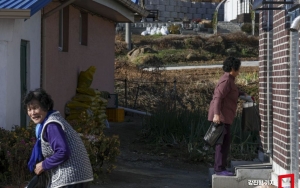
![[Initial Insight] It's Hard Enough Being Homeless](https://cphoto.asiae.co.kr/listimglink/1/2022040613374118517_1649219861.jpg)
"Hunger is said to be the greatest sorrow, but facing the sorrow of not having a proper place to stretch your legs and sleep at night is nothing compared to that. In a world where food is abundant and can be solved with just a few coins, and where one can even beg or, to put it bluntly, steal to eat, a place to sleep is not given just because someone knows your face or because there are many rooms."
The late writer Park Wan-seo expressed the hardships faced by the protagonist, a female factory worker in the 1980s, in securing a jeonse (long-term lease) house in her book Kind Bokhee with this one sentence. Nearly 40 years have passed since the novel’s setting, but the sorrow of the homeless has not changed. In fact, it is more accurate to say it has worsened. Starting with monthly rent, saving money carefully to secure a jeonse, gradually increasing capital to purchase a home was the 'grammar of Korean housing.' However, these days, it has become common for people who once lived on jeonse to revert to monthly rent. The jeonse system, which has served as an 'intermediate stage' for over 100 years before ordinary people buy homes, is no longer fulfilling its role.
What caused this stepping stone to collapse? The answer lies in the interest rates on jeonse loans from commercial banks. Jeonse loan interest rates have surged to levels equal to or higher than mortgage loan rates. The upper limit of jeonse loan interest rates at the four major banks (KB Kookmin, Shinhan, Hana, and Woori Bank, as of the 11th) is 5.77% per annum. In the first week of this month, the upper limit even exceeded 6%. Typically, jeonse loans have lower interest rates than mortgage loans because they are guaranteed by institutions like Seoul Guarantee Insurance, but this abnormal situation has unfolded. Ironically, the so-called 'loans for actual demand' are to blame.
From the banks’ perspective, jeonse tenants are 'fish already caught.' As the housing market worsened and mortgage loan demand decreased, banks deliberately lowered the margin interest rates to attract borrowers. But jeonse is different. As house prices rose, jeonse prices also increased by hundreds of millions of won in many cases, but tenants who urgently need a place to live must borrow more money. Banks see no reason to adjust interest rates for people who will come to them anyway. With interest rates reaching 6%, jeonse tenants’ minds have become complicated. The jeonse-to-monthly rent conversion rate of '100 million won deposit = 400,000 won monthly rent' was a basis for the saying 'jeonse is a way to make money' during low-interest periods, but in high-interest times, it proves that 'monthly rent is better.'
As tenants raised their voices, the Financial Services Commission announced plans to 'expand low-interest jeonse loans guaranteed by the Korea Housing Finance Corporation,' but this is a negligible measure in Seoul, where jeonse prices have skyrocketed. The government’s plan is to raise the loan limit from the current 222 million won to 440 million won starting in October, but only for jeonse prices below 700 million won. Most Seoul apartments with high jeonse prices are excluded from this.
Since interest rate hikes are inevitable until the end of the year, bold policies for jeonse tenants are urgently needed. One way is to extend the principal and interest repayment period of jeonse loans to 20 years, like the 50-year fixed-rate Bogeumjari Loan introduced this month. About half of the borrowers taking jeonse loans are in their 20s and 30s, who can expect future income. Considering this, extending the period is not a significant risk for banks and reduces the burden on borrowers. Nowadays, it is often more advantageous to receive tax credits on monthly rent expenses than on jeonse loan interest. Additional tax benefits for jeonse loans are also necessary.
In the real estate market, young tenants moving to redevelopment project areas have been seen frequently recently. Since the jeonse prices in redevelopment areas about to be reconstructed are relatively lower than in other areas, tenants reluctantly move there. In a high-interest environment, jeonse tenants’ choices are limited to moving to monthly rent, which means losing money, or relocating to areas with poor living conditions. As writer Park Wan-seo’s sentence suggests, worrying about not having a proper place to sleep is far worse than worrying about not having a meal.
© The Asia Business Daily(www.asiae.co.kr). All rights reserved.