![[New Korean Dream⑨] "Labor Shortage in Economic Activities" South Korea's Population Returning to the 1970s... The Solution is 'Women, Elderly, Foreigners'](https://cphoto.asiae.co.kr/listimglink/1/2022070515022038602_1657000940.jpg)
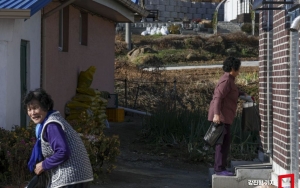
[Asia Economy Sejong=Reporter Kim Hyewon] There is growing credibility to the projection that South Korea's total population will revert to the late 1970s level by 2070. This is because the country's 'population cliff' phenomenon, having already entered an era of natural population decline where deaths outnumber births, is accelerating faster than expected. As the low birthrate and aging society deepen, the working-age population is rapidly decreasing, while the economically inactive elderly population aged 65 and over, which bears a heavy dependency burden, is expanding. In short, concerns about "who will raise the cattle" are becoming a reality. Experts unanimously agree that solutions must be found in 'women, the elderly, and foreigners.' To prevent the deterioration of growth potential due to population decline, it is necessary to create quality jobs for women and the elderly, encourage economic participation of foreigners, and furthermore, reconsider immigration policies.
According to the latest figures from Statistics Korea's future population projections (2020?2070) on the 6th, South Korea's total population is expected to be 37.66 million in 2070, which is the level recorded in 1979. The government projects that the population will fall from 51.84 million in 2020 to the 40 million range in the 2040s, and then shrink to the 30 million range in the late 2060s. The problem is that the forecast indicators are rapidly worsening. Over two years (2019?2021), the timing of total population decline was brought forward by eight years from 2029 to 2021, and all figures including the working-age population, total fertility rate, and elderly dependency ratio have deteriorated. This means that the changes in South Korea's population structure are more severe than previously thought. The scale of natural population decline is also expected to increase continuously from 30,000 in 2020 to 100,000 in 2030 and 510,000 in 2070.
![[New Korean Dream⑨] "Labor Shortage in Economic Activities" South Korea's Population Returning to the 1970s... The Solution is 'Women, Elderly, Foreigners'](https://cphoto.asiae.co.kr/listimglink/1/2022070515022838603_1657000948.jpg)
Key indicators to watch are the working-age population and the elderly population. Comparing the age composition ratios in 2020 and 2070, the proportion of the working-age population (15?64 years) will sharply drop from 72.1% to 46.1%, while the proportion of the elderly population aged 65 and over will significantly increase from 15.7% to 46.4%. In 50 years, the proportions of the working-age and elderly populations within the total population will be roughly equal, signaling that South Korea is 'aging.' The current working-age population of about 37 million is expected to plummet to around 17 million by 2070. The elderly population is projected to surpass 10 million in 2024 and reach 17.5 million by 2070. According to projections, the median age will rise from 43.7 years in 2020 to over 50 years in 2031 and reach 62.2 years by 2070.
Such rapid changes in population structure are manifesting as diverse and widespread risk factors across South Korea's economy and society. The decline in the working-age population reduces economic vitality, and the world's fastest aging threatens the sustainability of pension systems and welfare finances. Although the government recognizes the seriousness and has taken measures, these efforts are insufficient to prevent population decline. The Population Policy Task Force (TF) established during the Moon Jae-in administration was transformed into the Population Crisis Response TF under the Yoon Suk-yeol administration. This TF aims to mitigate the speed of population decline as much as possible and enhance the effectiveness of initiatives to expand economic participation by women, the elderly, and foreigners. However, these are short-term measures, and from a long-term perspective, there are calls to reconsider immigration policies for a multicultural society that promotes national unity.
![[New Korean Dream⑨] "Labor Shortage in Economic Activities" South Korea's Population Returning to the 1970s... The Solution is 'Women, Elderly, Foreigners'](https://cphoto.asiae.co.kr/listimglink/1/2022070515024738608_1657000967.jpg)
Experts advise referring to models from representative immigrant countries such as the United States, Australia, New Zealand, and Sweden. According to a report titled 'Analysis of the Impact of Population Structure on Economic Growth' published by the National Assembly Budget Office, OECD countries have pursued policies to increase the working-age population by encouraging the inflow of immigrants. These countries have simultaneously implemented foreign labor utilization and immigration policies as direct responses to labor shortages caused by low birthrates and aging. Particularly effective were incentives to retain highly educated professionals in their countries. Kim Kyungsoo, Economic Analyst of the Population Strategy Analysis Division at the National Assembly Budget Office, stated, "In OECD countries, the net migration per 1,000 population is expected to increase gradually from 0.8 in 1960 to 1.3 in 2020 and 1.7 in 2030," adding, "From 2024, net migration will have a greater impact on population growth than natural population change."
As of 2020, domestic nationals number 50.13 million, accounting for 96.7% of the total population, while foreigners number 1.7 million, making up 3.3%. Statistics Korea projects that by 2040, domestic nationals will be 48.03 million (95.7% of the total population) and foreigners 2.16 million (4.3%), representing a 1.3-fold increase in the proportion of foreigners compared to 2020.
Han Yosep, Research Fellow at the Korea Development Institute (KDI) Fiscal and Social Policy Research Department, said, "There are many concerns about foreign workers replacing domestic labor, but many in academia disagree," adding, "Rather, it helps preserve domestic jobs by ensuring the survival of companies." The researcher further emphasized, "Goods and products are freely exchanged globally, so why should labor alone be restricted? We need to actively pursue immigration policies to expand the economically active population." However, he also noted, "People do not live by economics alone; cultural conflicts arising from opening immigration policies must also be considered," adding, "The issue could become more serious for future generations, so how to integrate diversity is a national challenge."
© The Asia Business Daily(www.asiae.co.kr). All rights reserved.