![[Viewpoint] 'Energy Crisis' Requires More Thorough Supply Alternatives](https://cphoto.asiae.co.kr/listimglink/1/2021032513483449380_1616647715.jpg)
Russia, which invaded Ukraine, is the country with the largest natural gas reserves in the world. According to the Organization of the Petroleum Exporting Countries (OPEC), Russia's natural gas reserves amounted to 39 billion tons last year, accounting for 24% of the global total. As Russia wields natural gas as a weapon, European countries are suffering. The chairman of the Russian state-owned company Gazprom is Viktor Zubkov, a close aide to Russian President Vladimir Putin. The previous chairman was Dmitry Medvedev, who is currently the vice chairman of the National Security Council and a former president. Gazprom is Putin's ultimate weapon. Gazprom exclusively supplies gas to Europe and East Asia. The enormous financial revenue from gas exports is a solid foundation for maintaining Putin's political power.
Since the beginning of this year, the simultaneous impacts of US-driven global financial tightening and the surge in energy and raw material prices due to the Russia-Ukraine war have increasingly revealed damages to our companies. According to government statistics, the total import value of the three major energy sources?crude oil, gas, and coal?in the first quarter of this year was $23.55 billion, a sharp increase of $9.56 billion compared to the first quarter of last year. Energy prices are likely to rise further. Morgan Stanley forecasted that oil prices would increase by more than 20% this summer. The 'energy crisis,' which has been anticipated since last year, has become a reality.
According to the Power Statistics Information System, the price of liquefied natural gas (LNG) fuel in May surged approximately 140.4% to 1.07 million KRW per ton, compared to 452,553 KRW in January last year. In the case of coal, Australian coal prices rose 102.3% from $226 per ton in January this year to $488 on the 10th. The financial condition of power generation companies under Korea Electric Power Corporation (KEPCO), which produce electricity using energy, is worsening. Domestic electricity rates are lower than fuel purchase costs. If this situation continues, increased power consumption will lead to a vicious cycle of rising fuel purchase costs for imported fuels such as LNG and coal. The proportion of energy in our import value accounts for about one-third of total imports based on international oil prices. If international energy prices continue to soar as they are now, energy import costs could exceed one-third of total imports. Despite recording the highest exports in March during the first quarter, a trade deficit of $4 billion was recorded?the first in 14 years.
The biggest cause of this situation is Russia's weaponization of energy resources. Russia's invasion of Ukraine has led to rising global crude oil prices and worsened logistics difficulties. Climate change in India, which accounts for 13% of global cargo volume, is also one of the causes. As India's heatwave continues and coal stockpiles decrease, coal imports are increasing. Consequently, coal prices in South Africa and Indonesia are rising. In particular, Indonesian coal, despite being low-calorie coal, rose about threefold from an average of $95 per ton last year to an average of $132 per ton from January to May this year.
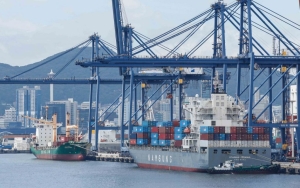
As the energy crisis becomes a reality, the government must review and respond to the energy supply system, including coal, more thoroughly by scenario with an extraordinary determination. South Korea depends on Qatar for 25% and the United States for 14% of its total LNG imports. Coal is mainly imported from Australia and Indonesia. With the prolonged Ukraine crisis intensifying energy supply instability, there is no room to relax vigilance even for a moment. The public must also be reminded of the necessity of energy conservation.
Kang Cheon-gu, Invited Professor, Department of Energy Resources Engineering, Inha University
© The Asia Business Daily(www.asiae.co.kr). All rights reserved.