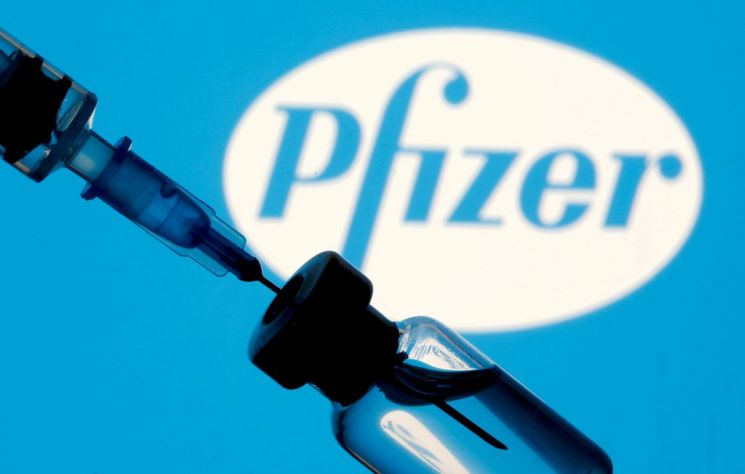
[Asia Economy Reporter Seo So-jung] The government has allowed the administration interval for messenger RNA (mRNA) vaccines such as Pfizer and Moderna to be extended up to a maximum of 6 weeks if necessary.
According to the COVID-19 Vaccination Response Promotion Team on the 23rd, the Vaccination Expert Committee (Chairperson Choi Eun-ha) announced that although the current intervals for Pfizer and Moderna vaccines are 3 weeks and 4 weeks respectively, the interval has been changed to allow vaccination within a maximum of 6 weeks depending on the vaccination conditions of medical institutions and the personal circumstances of vaccine recipients.
Accordingly, from the 26th, those receiving the Pfizer vaccine will temporarily have their second dose appointments scheduled based on a 4-week interval until August.
Kim Ki-nam, Head of the Vaccination Management Division of the COVID-19 Vaccination Response Promotion Team, explained, "Germany recommends an interval of 3 to 6 weeks for the Pfizer vaccine, and the UK, which had been administering vaccines based on a 12-week interval regardless of vaccine type, recently changed it to 8 weeks. Canada also allows exceptions up to 16 weeks for Pfizer and Moderna vaccines."
Kim added, "The standard vaccination intervals are 3 weeks for Pfizer and 4 weeks for Moderna, but due to current vaccine supply situations, conditions at medical institutions, and individual circumstances, exact adherence to the 3- and 4-week intervals has not always been possible, and cases of exceeding these intervals have occurred. The primary purpose of applying flexible standards according to these situations is to efficiently respond to large-scale vaccinations from late July to August."
Authorities: "Adjustment of vaccination intervals is not due to vaccine import or supply schedule disruptions... for medical institutions' convenience"
He said, "Currently, pre-booking for those aged 50 and above is underway, and all reservations were made based on a 4-week interval for the Moderna vaccine. However, for those receiving the Pfizer vaccine starting next week, changing the interval back to 3 weeks would require altering all medical institutions' reservations, and considering that vaccination capacities vary by institution, it is difficult to uniformly move the interval from 4 weeks to 3 weeks earlier."
In response to questions about whether the adjustment of vaccination intervals was due to disruptions in vaccine import or supply schedules, he explained, "There is no disruption in the total supply or import schedule of vaccines. The Moderna vaccine interval is not being extended, and the second dose date for Pfizer vaccine recipients is being guided based on a 4-week interval."
However, those who have already received the first dose of the Pfizer vaccine will maintain the 3-week interval as instructed, and for elementary and secondary school staff, as well as kindergarten and daycare teachers who will begin vaccination on the 28th, the 3-week interval will be maintained to avoid disruptions to the academic schedule.
The Promotion Team added, "We ask for the public’s understanding and cooperation regarding the adjustment of the second dose dates for mRNA vaccines to flexibly respond to detailed supply situations relative to reservations at vaccination institutions and to stably carry out vaccinations for approximately 7.4 million people aged in their 50s."
Meanwhile, the Promotion Team plans to announce the August vaccination plan in the latter half of next week. This plan will include vaccinations for those aged 18 to 49, with the reservation start date expected to be around mid-August.
© The Asia Business Daily(www.asiae.co.kr). All rights reserved.