Ministry of Environment Releases Monitoring Results of 11 Opened Weirs Including Geumgang, Yeongsangang, and Nakdonggang
[Sejong=Asia Economy Reporter Joo Sang-don] As a result of opening 11 weirs on the Geumgang, Yeongsangang, and Nakdonggang rivers, the occurrence of green algae (harmful cyanobacteria), which frequently appears in summer, decreased mainly in the Geumgang and Yeongsangang weirs where the opening width was large. However, some locations showed deterioration in water quality indicators such as organic matter and nutrients.
The Ministry of Environment disclosed on the 14th the monitoring results from June 2017 to the second half of 2020 for the 11 opened weirs on the Geumgang, Yeongsangang, and Nakdonggang rivers.
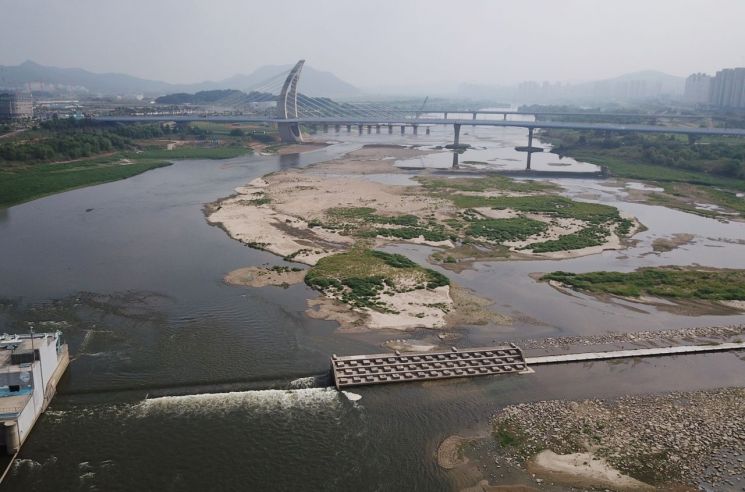
Green algae, which frequently occur in summer, tended to decrease mainly in the Geumgang and Yeongsangang weirs where the opening width was large. In 2019, which had weather conditions similar to the average of 2013?2017, the harmful cyanobacteria cell counts in Geumgang and Yeongsangang decreased by more than 95% compared to the average of previous years. At Geumgang Weir, the count dropped from 4800/mL to 263/mL, a 95% decrease, and at Yeongsangang, from 4693/mL to 163/mL, a 97% decrease. In 2020, due to heavy rainfall, green algae levels were generally low, but in 2018, after a short rainy season followed by severe heatwaves, green algae increased at most weirs except for Gongju Weir and Seungchon Weir, which had large opening widths.
After opening the weirs, hypoxia in the lower layers did not occur or its frequency decreased. Hypoxia in the lower layers refers to a dissolved oxygen level of 2 mg/L or less; when dissolved oxygen is insufficient in the lower layers of a river, it is known to adversely affect benthic aquatic organisms and the overall aquatic ecosystem. At Baekje Weir on the Geumgang and Seungchon Weir on the Yeongsangang, no hypoxia was observed during the full opening period, and at Dalseong and Hapcheon Changnyeong Weirs in the lower Nakdonggang, the frequency of hypoxia decreased after partial opening.
Water quality indicators such as BOD (biochemical oxygen demand) and average total phosphorus (T-P) values showed variations by weir before and after development. In fact, at Sejong and Gongju Weirs on the Geumgang, BOD and T-P were similar or increased after opening compared to before, while chlorophyll-a concentrations tended to decrease. A Ministry of Environment official explained, "Water quality indicators such as BOD and T-P are mainly influenced by changes in rainfall and pollution levels from upstream tributaries," adding, "In the Geumgang weir sections, changes in organic matter and nutrients before and after opening show similar trends to the increases or decreases in inflow concentrations from upstream areas such as Miho Stream during the same period."
Following the opening of the weirs, diverse habitats for wildlife were created, leading to improvements in ecosystem health. The opening of the weirs accelerated water flow and formed clean sandbanks and gravel beds, improving the river environment and increasing the health indices of aquatic ecosystems (fish and benthic animal health indices). Notably, the white-spotted snowfish, which inhabits only fast-flowing, clean sandy areas, was rediscovered downstream of Sejong Weir in 2019 and was observed upstream and downstream of Gongju Weir in 2020, indicating an expansion of its habitat range.
Park Mi-ja, head of the Ministry of Environment’s Four Major Rivers Investigation and Evaluation Team, stated, "After monitoring for more than three years following the opening of the weirs, we confirmed several meaningful effects as water flow improved," and added, "This year, we plan to do our best to establish operational conditions for the Han River and Nakdonggang weirs based on the decisions made by the Watershed Management Committee in February regarding climate change and disaster preparedness."
© The Asia Business Daily(www.asiae.co.kr). All rights reserved.