Government to Ease Income Criteria for Newlywed Special Housing
Current Standards Make It Difficult for Dual-Income Couples
Lowering Criteria Expected to Greatly Increase Opportunities
Careful Point Assessment Needed... First-Time Homebuyers May Benefit More
If Requirements Not Met, Aim for General Supply Opportunities
[Asia Economy Reporter Moon Jiwon] The government has officially begun reviewing adjustments to the income requirements for the special supply for newlyweds (hereafter referred to as special supply). This is a follow-up measure after Kim Hyun-mi, Minister of Land, Infrastructure and Transport, announced plans to ease income requirements. As the revision work is expected to be completed before the preliminary subscription next year, interest is growing among newlyweds aiming to move into the 3rd generation new towns.
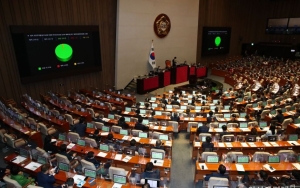
According to the Ministry of Land, Infrastructure and Transport (MOLIT) and industry sources on the 18th, MOLIT is reportedly considering raising the income criteria for newlywed special supply not only for public housing but also for private sales during the current discussions. Earlier, on the 16th, Minister Kim stated during the National Assembly plenary session's economic sector questioning, "In the case of dual-income couples, income requirements sometimes prevent them from qualifying to apply," adding, "We plan to revise the subscription system to improve income requirements." Regarding this, a MOLIT official explained, "Since there is a newlywed special supply for both public and private sales, we are reviewing adjustments to income requirements overall."
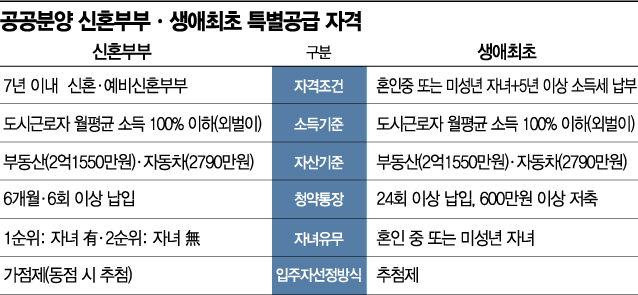
Currently, for public housing, the income limit is 100% of the average monthly urban worker income (120% for dual-income couples), while for private housing, 75% of the units require 100% (120% for dual-income) or less, and the remaining 25% require 120% (130% for dual-income) or less. This income requirement adjustment is closely related to the preliminary subscription for the 3rd generation new towns starting in July next year. The government allocated 30% of the 60,000 preliminary subscription units to newlywed special supply, but since these are public sales, the income criteria are low, leading to many criticisms that many college-educated dual-income couples find it difficult even to apply.
Looking at the 2020 average monthly income of urban workers (for a household of three), 100% corresponds to 5.62 million KRW, 120% to 6.75 million KRW, and 130% to 7.31 million KRW. An industry insider said, "Dual-income couples working in small and medium enterprises and single-income couples in large companies might qualify, but dual-income couples in large companies find it difficult to qualify for the newlywed special supply," adding, "Especially nowadays, many get married after accumulating years of experience, so many are excluded based on income criteria."
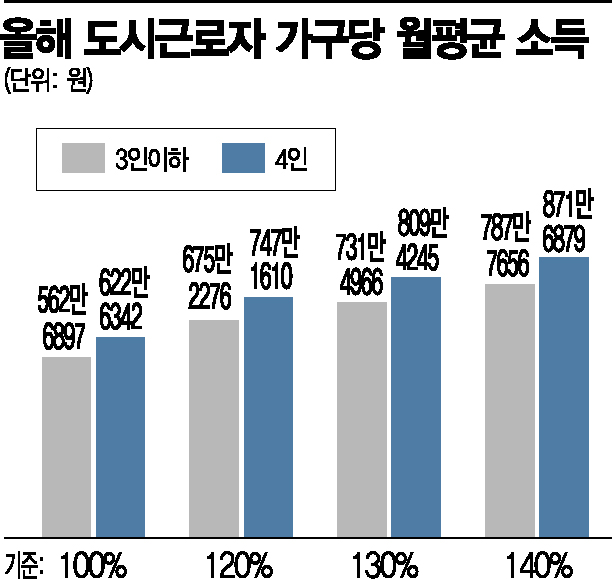
In July, MOLIT lowered the income criteria for newlyweds purchasing a home for the first time to 130% (140% for dual-income couples), but this only applies to newlywed hope towns (public sales) priced above 600 million KRW and private housing. The newlywed hope town has already relaxed its criteria once but is considering further expanding the income range. A MOLIT official said, "Newlywed hope towns are allocated units separately during the preliminary subscription, apart from the special supply."
Some predict that the income criteria for newlywed special supply could also rise to 130%. In that case, the number of eligible applicants is expected to increase significantly. However, since the number of units is limited, competition for subscriptions will inevitably rise. If income requirements are met, winners are selected based on points. The more children and the longer the residence period in the relevant area, the more advantageous it is. The highest score per category is 3 points, with a perfect score of 13 points. Jung Ji-young, CEO of iOne and author of "Korea Subscription Map," explained, "Most points are distributed around 10 to 11," adding, "If you have 7 to 8 points, it is better to apply for the first-time special supply."
Newlyweds who still do not meet the income requirements even after easing can apply for the general supply, which accounts for 15% of the preliminary subscription units. Since the general supply is based on a sequential ranking system, it is difficult for people in their 30s with fewer payment installments to win, but with a good strategy, there is a possibility. CEO Jung said, "Among the 3rd generation new towns, locations that are less preferred by others will likely have lower recognized payment amounts," adding, "You need to strategically consider whether your goal is winning the subscription or earning profits."
© The Asia Business Daily(www.asiae.co.kr). All rights reserved.