[Asia Economy Reporter Kim Bo-kyung] As heavy rains and typhoons continue during the monsoon season, concerns about electric shock accidents caused by house flooding and short circuits have also increased. While natural disasters cannot be prevented, knowing how to respond and preparing in advance can significantly reduce subsequent damage.
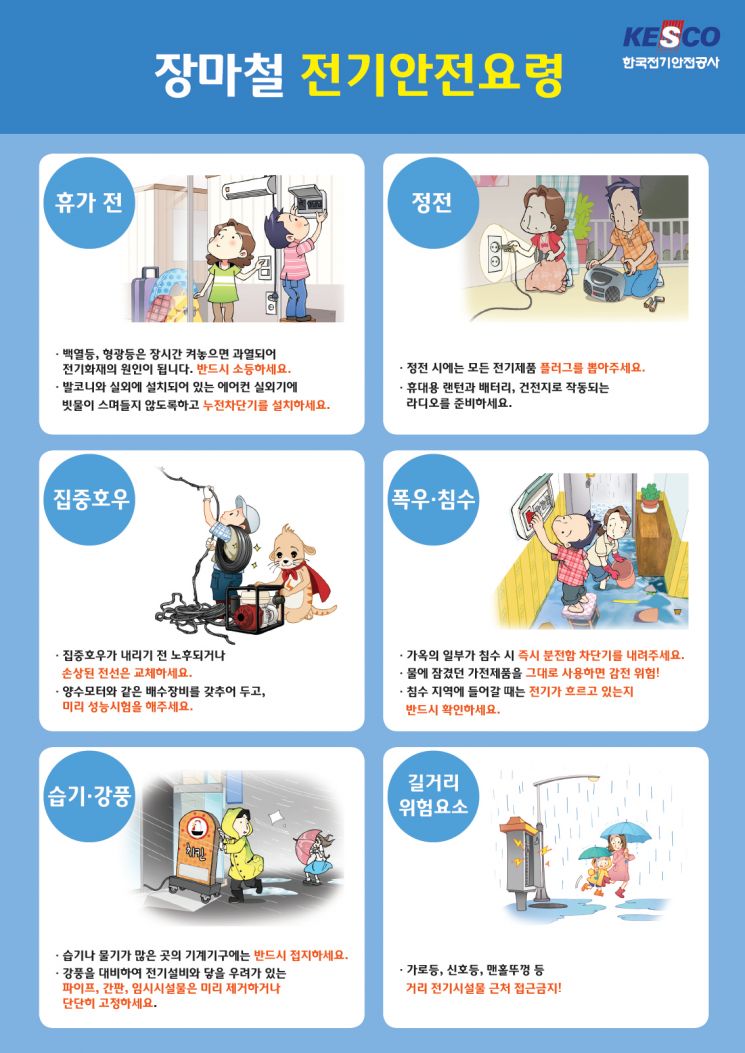
First, learn the prevention methods. The heavy rain brought by typhoons causes flooding not only around rivers and streams but also in low-lying residential areas. It is important to check in advance whether outdoor drains and drainage facilities are blocked and to clear the water paths.
Carefully inspect the insulation condition of exposed wires inside and outside buildings or houses. Old, worn, or peeled wires should be replaced immediately, but under flooded or rainy conditions, never touch or approach the wires.
It is best not to go outside when heavy rain and wind are blowing. If you must go out, wear rain boots and avoid manhole covers on the road, utility poles, streetlights, and outdoor advertisements.
If streetlights or outdoor signboards have fallen, do not approach them and immediately report by calling the Fire Department (119), Korea Electric Power Corporation (123), or Korea Electrical Safety Corporation (1588-7500).
If water starts to accumulate in the house due to heavy rain damage, first turn off the circuit breaker in the distribution box in front of the entrance. Do not forget to unplug electrical appliances as well. Always use rubber gloves or a dry cloth when handling the plugs.
The circuit breaker detects electricity leakage in the house wiring and automatically cuts off the power immediately. When performing a manual test, pressing the breaker button should produce a "click" sound and the switch should go down to indicate normal operation.
It is dangerous to turn the circuit breaker back on and use electricity immediately after the water has drained. Using electrical appliances while moisture remains can cause secondary accidents such as electric shocks. Before reuse, it is recommended to have the products inspected by the product seller’s AS center or an electrical contractor.
If a life-threatening electric shock accident occurs, immediately call 119, turn off the circuit breaker, and use insulating materials such as rubber gloves or wood to separate the victim from the wires or faulty devices.
Once it is confirmed that no current is flowing, move the victim to a safe place, check consciousness, breathing, and pulse, and perform emergency measures such as cardiopulmonary resuscitation until paramedics arrive.
© The Asia Business Daily(www.asiae.co.kr). All rights reserved.