[Asia Economy Reporter Hwang Junho] Domestic researchers have developed a blue light LED that is 10 times brighter and easier to produce than existing blue light emitting devices (LEDs). This has attracted attention as a domestic technology that can replace blue light LED devices developed in Japan.
On the 6th, according to the Korea Institute of Science and Technology, a research team led by Senior Researcher Song Jindong of the Next Generation Semiconductor Research Center and Director Jang Junyeon, in collaboration with Ando Yeol, CEO of PetaLux Co., Ltd. (Chair Professor at University of Seoul), announced these research results.
Development of Blue Light LED Using Copper Iodide
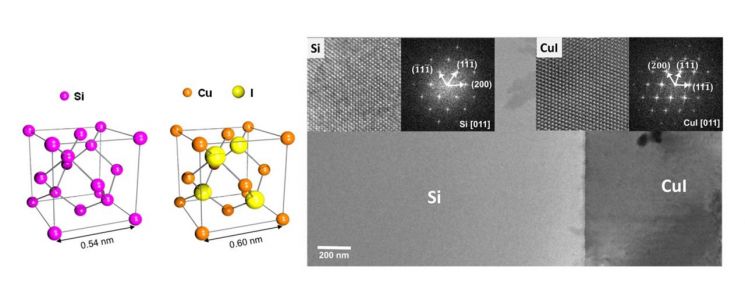
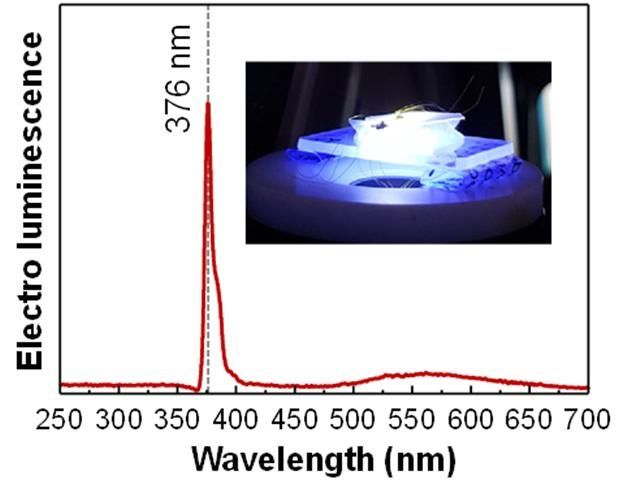
The research team developed a blue light LED using copper iodide (CuI), a group 1-7 compound synthesized from copper (Cu) and iodine (I). This is the world's first implementation of a blue light LED using copper iodide.
Elements in groups 1-7 of the periodic table have strong electrical interactions, resulting in high atomic bonding strength, making them difficult to use as semiconductors. However, this technology is evaluated as opening a new chapter in semiconductor material technology.
In particular, this technology can grow on inexpensive silicon (Si) substrates with few defects. It can also be applied to existing semiconductor manufacturing processes. Large-area silicon substrates (300mm) can be used as is, and the copper iodide thin film growth temperature is similar to the temperature (below 300 degrees Celsius) used in silicon-based CMOS device processes, allowing copper iodide to be deposited without degradation.
Potential to Replace Japanese Technology
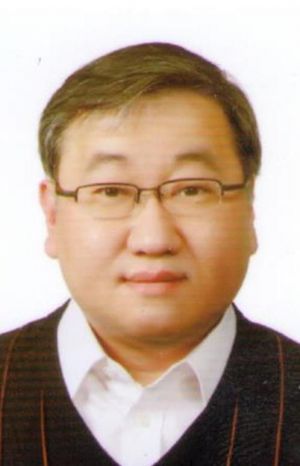
Director Song Jindong said, "We succeeded in blue (ultraviolet) emission with high production efficiency by replacing the existing p-type gallium nitride. We will continue research to improve performance."
Director Jang Junyeon stated, "Since it has many advantages compared to existing LEDs, it is expected to attract great attention as a new light-emitting semiconductor material that can replace gallium nitride, which Japan currently monopolizes."
Ando Yeol, CEO of PetaLux Co., Ltd. (Chair Professor at University of Seoul), explained, "We were the first to report theoretical predictions on the excellence of copper halide semiconductors in 2016 and possess the original technology. We expect this research achievement to enable commercial production as new blue and ultraviolet light sources."
© The Asia Business Daily(www.asiae.co.kr). All rights reserved.